
Most aquarium lighting advice stops at choosing the right bulb and setting a schedule. That covers the fixture itself, but a fixture is only one piece of a lighting system. The mounting hardware, the diffusion, the reflectors, the backup power, even the tools you use to wipe down the lens all affect how much usable light actually reaches your fish and plants, and how much hassle the whole setup is to live with day to day.
Mounting Arms and Brackets for Rimless and Odd-Size Tanks
If you already own a tank and a light, here’s the inventory of accessories most setups are still missing.
Stock clip-on mounts are built for standard rectangular tanks with a rim. If your tank is rimless, bowfront, or an unusual width, the mount that came in the box may not sit flush, and a light that rocks or slides is a light that eventually ends up in the water.
Look for:
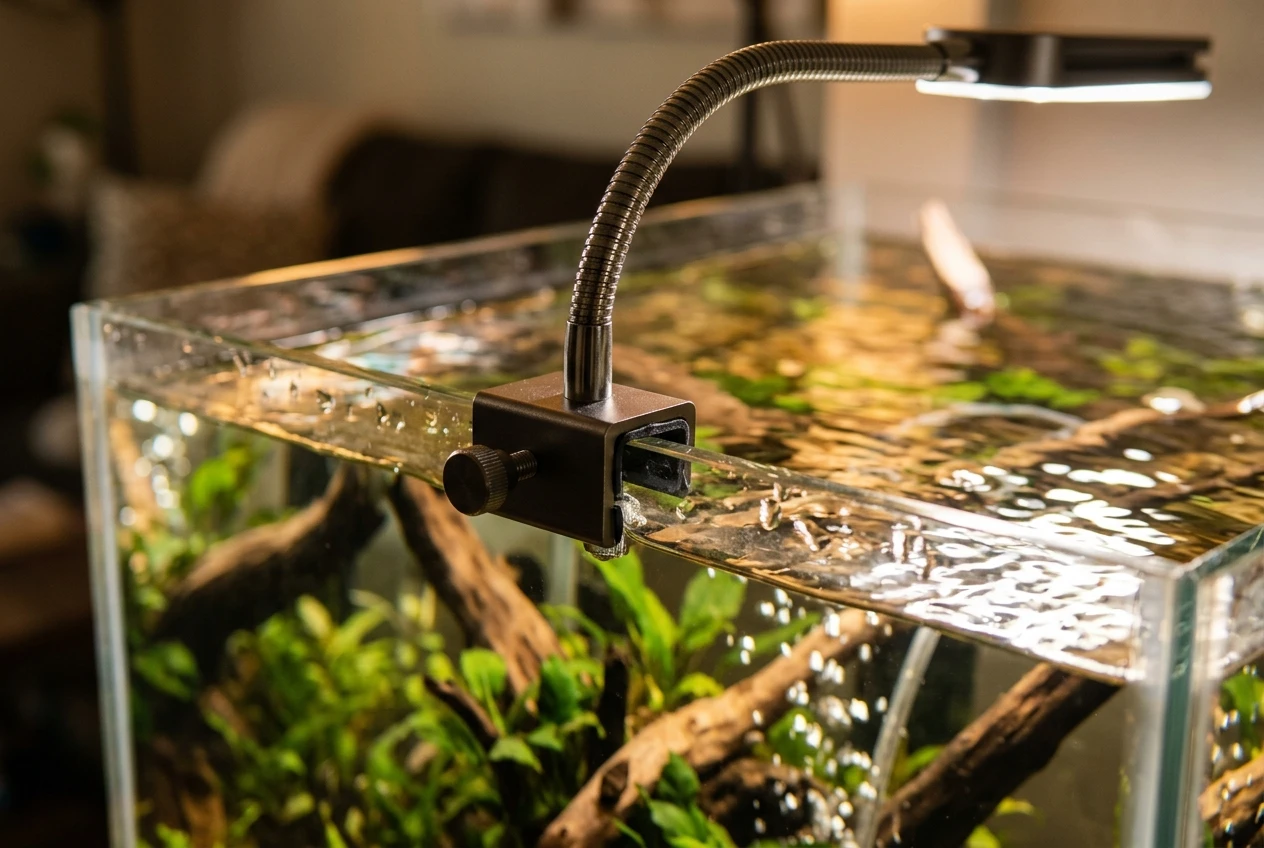
Extendable mounting arms that adjust to tanks wider or narrower than the fixture’s default clip spacing
Low-profile brackets designed for rimless glass, which clamp to the tank wall rather than resting on a lip
Gooseneck or articulating arms if you want to angle the light across the tank instead of straight down, useful for taller tanks or planted layouts where you’re trying to reach the lower leaves
A mount that fits your exact tank geometry is cheap insurance against a dropped fixture and against light spilling where you don’t want it, like onto the wall behind the stand.
Timers and Controllers That Automate Your Light Cycle
A timer is the accessory that turns “I’ll remember to turn the light off” into something that actually happens every day. Mechanical outlet timers work, but they wear out and can slip over months of daily cycling.
Digital timers hold their schedule through power outages and let you set multiple on/off windows a day, which matters if you’re running a midday break to curb algae growth. Smart plugs controlled from a phone app go a step further, letting you adjust the schedule remotely or check that the light actually fired on schedule while you were out.
If your fixture has its own built-in controller with dimming and color ramping, an external timer or smart plug still makes sense as a backup, so the tank isn’t dependent on one single piece of electronics. For more on why a steady schedule matters in the first place, see Aquarium Lighting Schedule For Fish Health.
Diffusers and Lenses That Soften Harsh LED Spotlighting
High-output LED fixtures are efficient, but a lot of them throw hard, direct light that creates visible shimmer lines and a spotlight effect in the center of the tank while the edges stay dim. Fish under that kind of lighting can look washed out in the middle and shadowed at the glass.
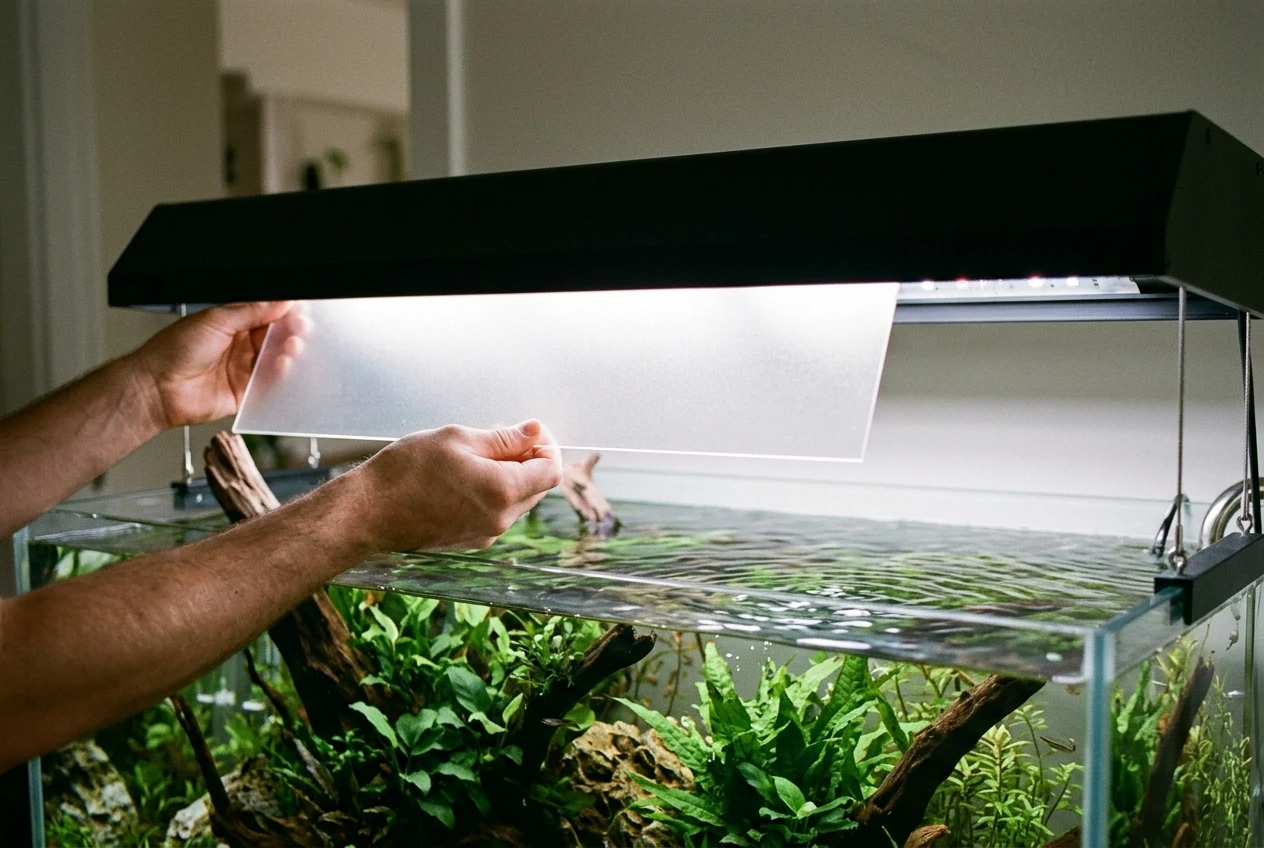
A diffuser panel, usually a frosted acrylic or polycarbonate sheet mounted just under the light, spreads the output across a wider area and softens the contrast. Some fixtures accept snap-in diffuser lenses made for that exact model; others need a generic diffuser cut to size and set into the hood or suspended just above the water.
The tradeoff is a small loss in total light intensity, which matters if you’re growing demanding plants or corals. For a community fish tank or a lightly planted setup, the more even, natural look is usually worth that tradeoff.
Reflectors That Get More Light Down to the Substrate
Open-top tanks and hanging fixtures lose a lot of light sideways and upward, light that never reaches the plants or substrate it was meant for. A reflector mounted above or around the bulb redirects that stray light back down into the water column.
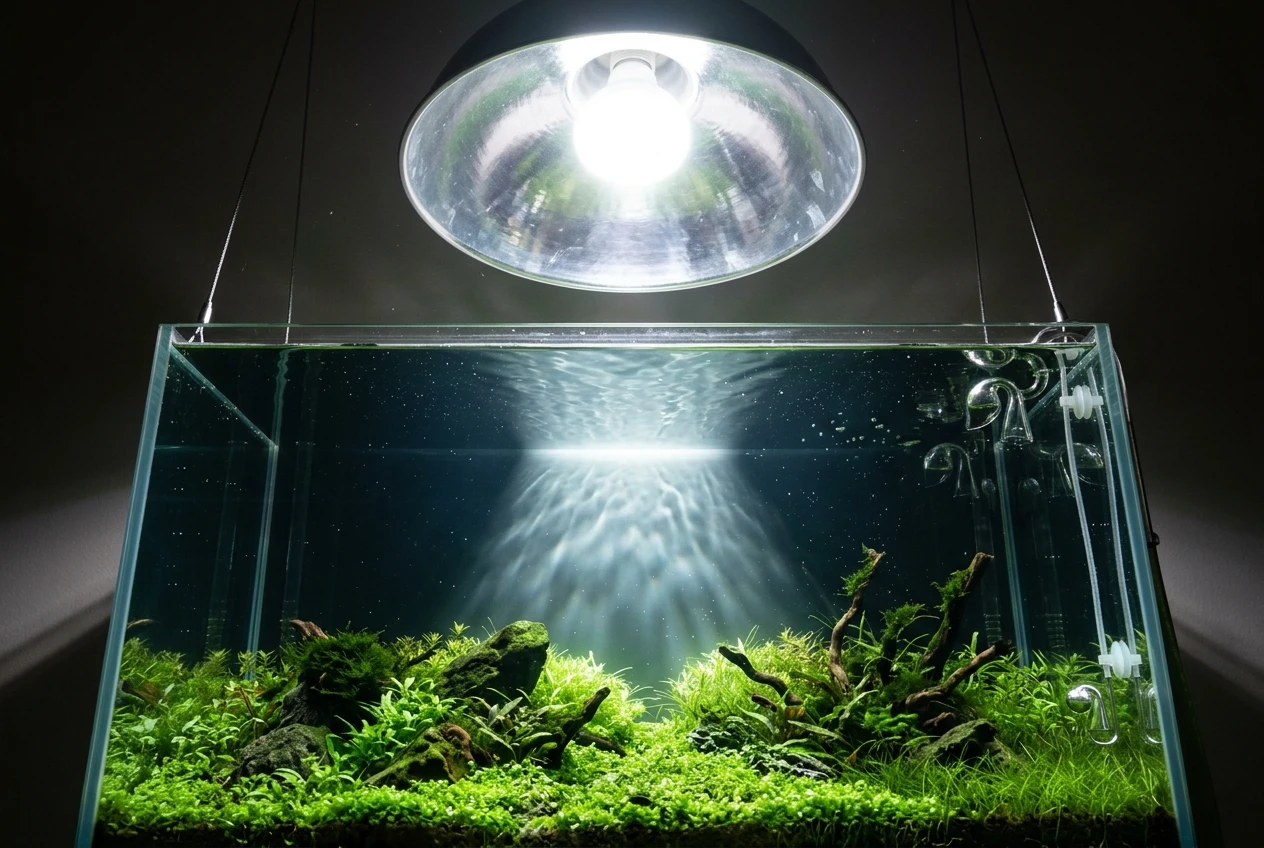
This matters most for:
-
Accessories For Proper Tank Setup
Most aquarium lighting advice stops at choosing the right bulb and setting a schedule. That covers the fixture itself, but a fixture is only one piece of a
-
Lighting For Fish Health
Getting your aquarium lighting schedule right plays a big role in how healthy your fish are and how well your tank flourishes. Lighting is not just about making things look bright and cool. It shapes behavior, sleep cycles, growth, and even algae outbreaks. When I set up my first real tank, I was surprised by…
-
Benefits Of Aquarium Backgrounds
Aquarium backgrounds do a lot more than just make your fish tank look cool. These backdrops play a big part when it comes to your fish’s comfort, health, and even your tank’s overall vibe. After switching my tanks to different backgrounds over the years, I’ve seen first hand how they affect both fish and plants,…
-
Accessories For Proper Tank Setup
Most aquarium lighting advice stops at choosing the right bulb and setting a schedule. That covers the fixture itself, but a fixture is only one piece of a
-
Lighting For Fish Health
Getting your aquarium lighting schedule right plays a big role in how healthy your fish are and how well your tank flourishes. Lighting is not just about making things look bright and cool. It shapes behavior, sleep cycles, growth, and even algae outbreaks. When I set up my first real tank, I was surprised by…
-
Benefits Of Aquarium Backgrounds
Aquarium backgrounds do a lot more than just make your fish tank look cool. These backdrops play a big part when it comes to your fish’s comfort, health, and even your tank’s overall vibe. After switching my tanks to different backgrounds over the years, I’ve seen first hand how they affect both fish and plants,…
Taller tanks, where light intensity drops off fast with depth
- Pendant and suspended fixtures, which lose more light to the surrounding room than hoods that sit directly on the tank
- Polished metal reflectors are the most efficient but show fingerprints and water spots quickly.
- White or matte reflectors diffuse a bit more but are easier to keep clean. Either is an upgrade over no reflector at all on a fixture that doesn’t already include one.
Moonlight and Nighttime LEDs for Viewing Without Stressing Fish
A tank gone fully dark at night is good for fish, but it also means you can’t see anything if you want to check on the tank, or just enjoy watching nocturnal species come out. Blue or deep-blue moonlight LEDs give enough light to see shapes and movement without triggering the same response as daytime lighting.
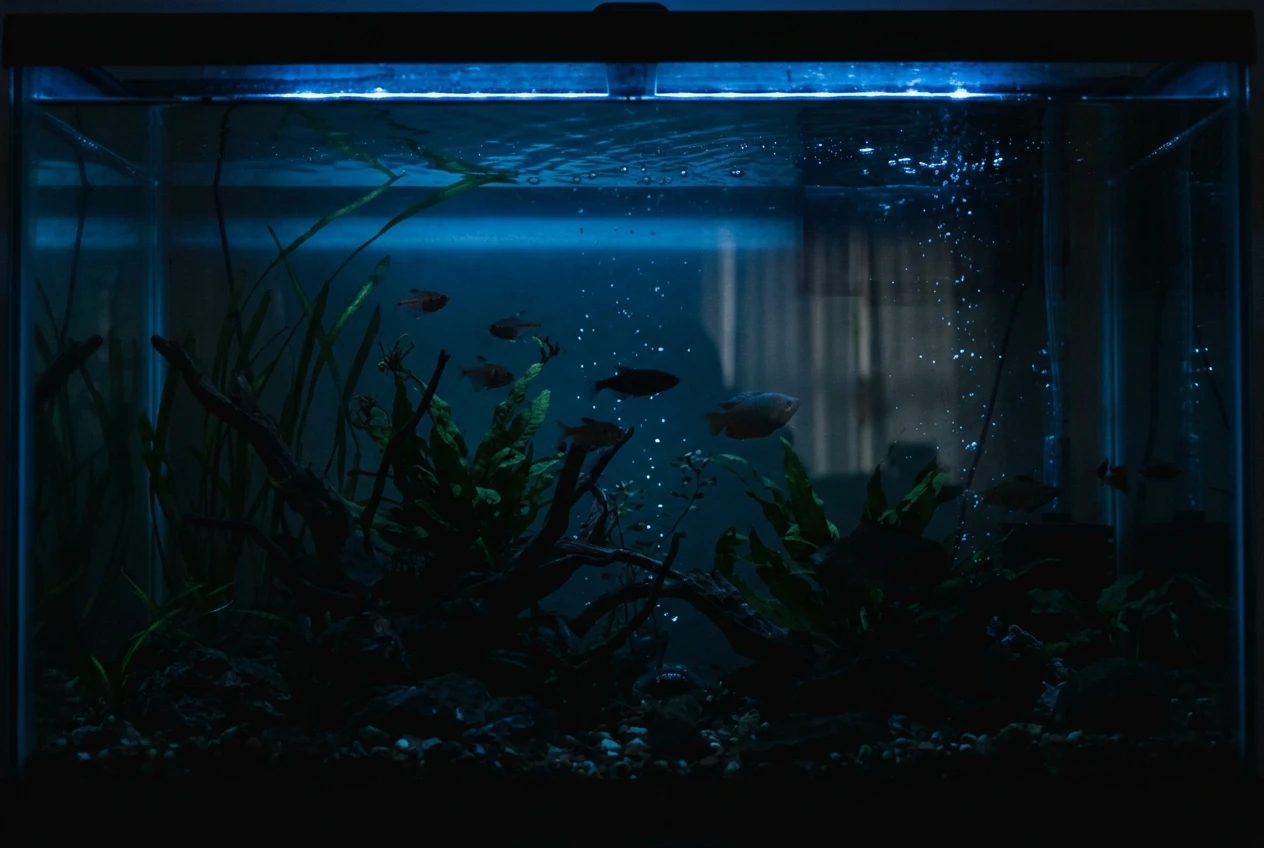
Many modern fixtures include a moonlight mode built in, cycling on automatically after the main light shuts off. If yours doesn’t, a separate low-wattage blue LED strip on its own timer, set to run a few hours after lights-out, does the same job without disrupting your light cycle. Keep the intensity low. The goal is dim ambient light, not a second daytime.
If you want the fuller picture of how different light wavelengths and intensities affect fish behavior and stress, How Aquarium Lighting Affects Fish Health goes into that in more depth.
Backup Power and Surge Protection for Your Lighting Setup
A power outage that lasts a few hours usually isn’t a crisis for the fish, but it can throw off a carefully built lighting schedule, and a surge when power comes back can damage sensitive LED drivers. Two accessories address this from opposite ends:
A surge protector rated for aquarium use, placed between the outlet and the fixture, absorbs the spike when power returns and protects the driver
A battery backup or UPS unit keeps a timer or smart plug running through a short outage so the schedule doesn’t reset or drift
Neither is essential for every setup, but if you’re running an expensive high-output fixture or a planted tank where consistent timing matters, both are worth the modest cost relative to replacing a fried driver.
Cleaning Tools for Lenses, Covers, and Fixture Housings
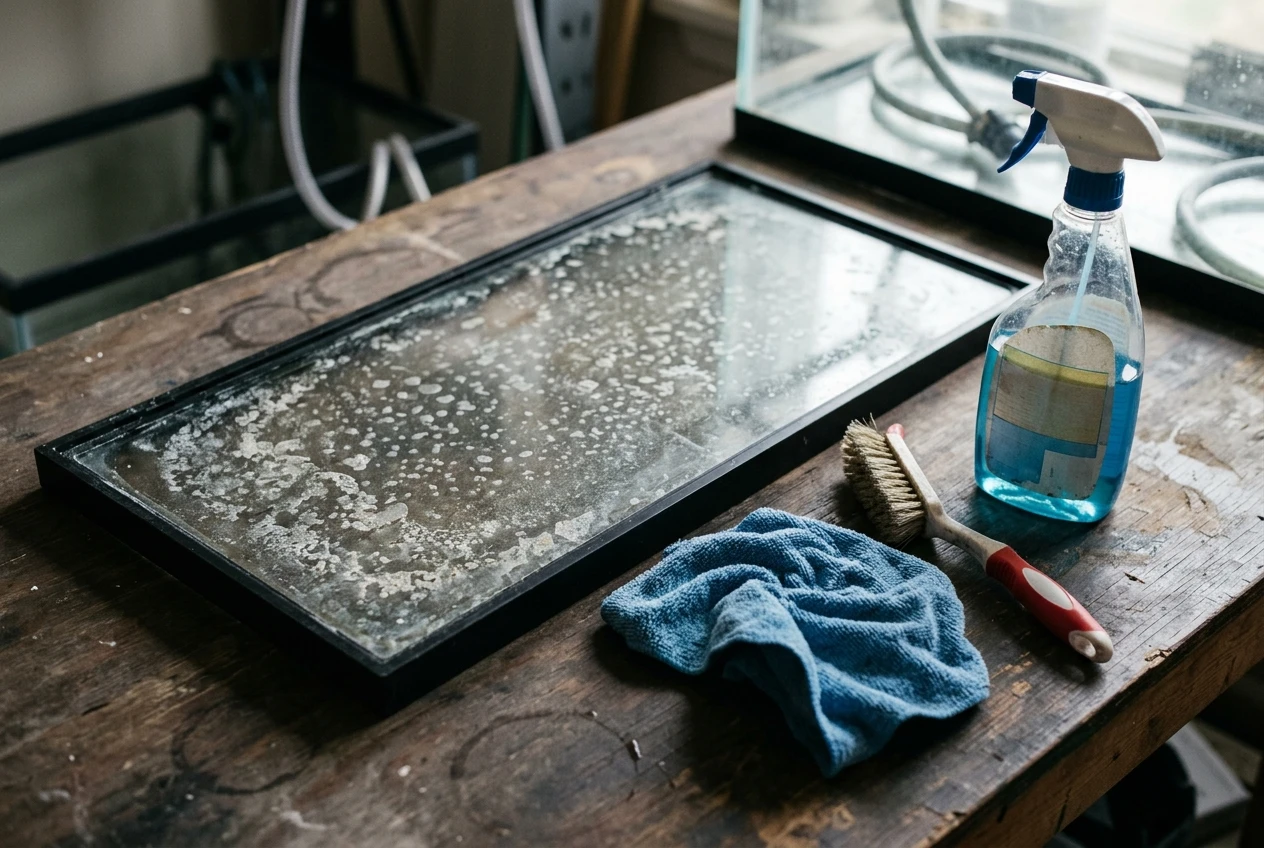
Hard water spots, salt creep on saltwater setups, and a film of dust and evaporated minerals all build up on lenses and glass covers over time, and all of it cuts down on the light actually reaching the water. A fixture that looks fine but hasn’t been wiped down in months can be running at a noticeably reduced output.
Useful tools:
A soft microfiber cloth for wiping down lenses and housings without scratching the coating
A mild aquarium-safe glass cleaner or diluted vinegar solution for mineral deposits, kept away from any electronicsA small brush for getting into vents and seams on fixtures with cooling fans, where dust buildup can also affect heat dissipationA squeegee for the underside of glass tops, where condensation and splash marks collect fastest
Build a quick lens wipe-down into your regular tank maintenance routine rather than treating it as a separate job. It takes a minute and it’s easy to forget until the light output has already dropped noticeably.
Building a Lighting Kit That Actually Fits Your Tank
Not every tank needs every accessory on this list. A small betta tank with a simple fixture probably just needs a reliable timer and a basic moonlight option. A larger planted or reef tank benefits from the full set: a proper mount, diffusion, reflectors, backup power, and a cleaning routine that keeps the lens clear.
Start by matching accessories to your specific tank shape and fixture type rather than buying generically. A mount for a rimless tank won’t help if your tank has a rim, and a reflector designed for a flat-panel LED won’t fit a pendant light. If you’re still working out which fixture and tank style suit your setup in the first place, How To Choose An Aquarium Type is a useful starting point before you build out the accessories around it.
Browse our current roundup of aquarium lighting accessories to find pieces that fit your tank size and fixture before you buy.