
Big dogs are hard on beds, and the reason is physics. A bed that feels firm under a 15 lb terrier can compress to the floor under a 90 lb Lab, and a giant breed can ask more of a bed than most are built to give. If you have a Shepherd, a Mastiff, a Great Dane or any dog in that weight range, you have probably already bought a bed that looked great for a month and then turned into a flat, lumpy pancake.
This guide covers the best orthopedic dog beds for large breeds by construction type, since the details that decide whether a bed holds up (foam thickness, density, cover fabric, base layer) are listed by manufacturers for each specific model and size. We rank five bed designs for heavy dogs and tell you exactly what to check on the manufacturer’s own spec page before you buy. We have not made up numbers for you. If a spec is not published, treat that as an answer too.
Why big dogs wear out ordinary beds so quickly
Foam compresses under load. The heavier the dog, the more of the foam’s thickness gets used up just to hold the body, and the less is left to cushion. In a bed that is too thin or too soft, a large dog’s hips and shoulders push through the cushioning and the body ends up resting on whatever is under it: the floor, a thin base layer, or the seam of the cover.
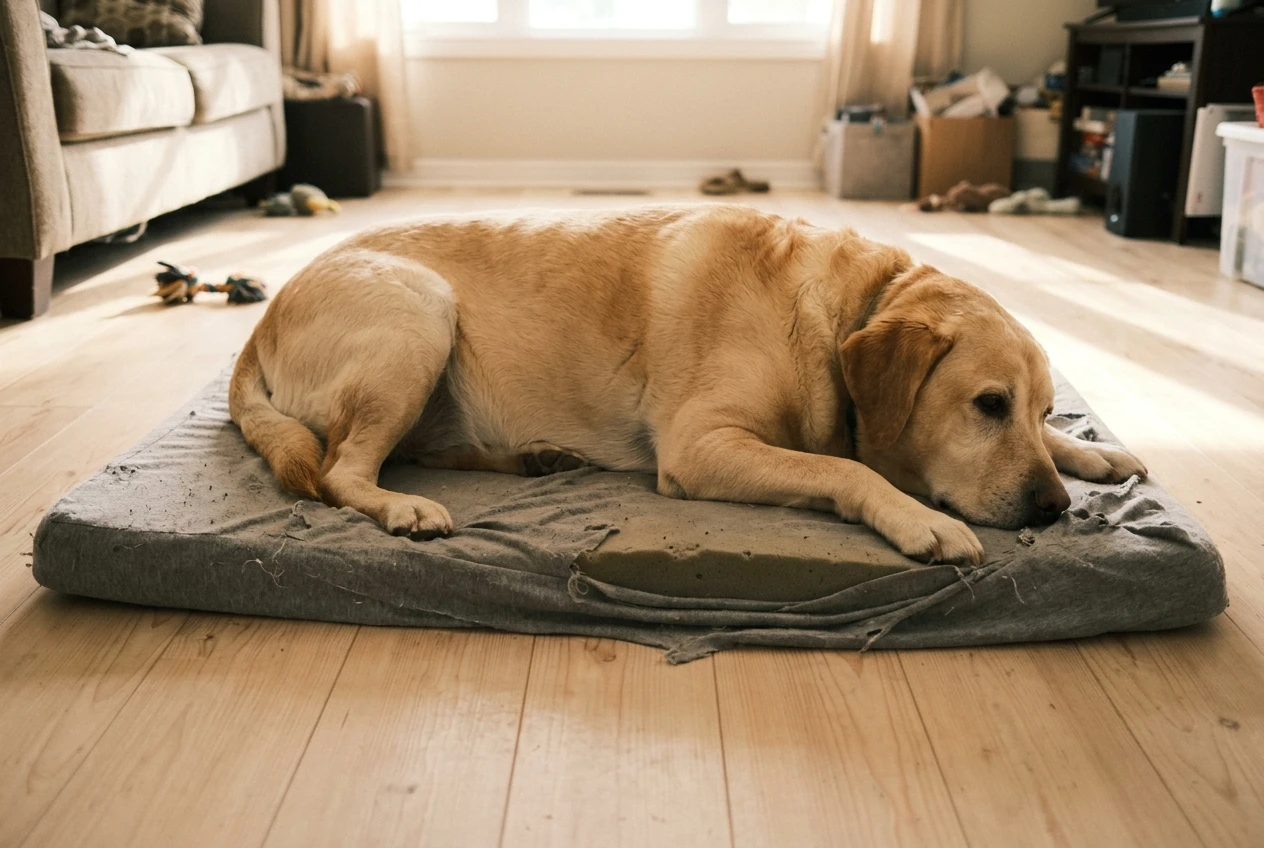
Three things go wrong with ordinary beds:
- The foam compresses permanently. Low-quality foam does not spring back. The spot where your dog lies most becomes a dip that gets deeper every week.
- The filling shifts. Loose fill such as shredded foam or fiberfill migrates to the edges and leaves the middle empty. A heavy dog lies in exactly that middle.
- The cover fails. Large dogs dig, circle and paw at their bed before lying down. Thin fabric and light stitching give way at the seams.
Joints are the other reason this matters. Large and giant breeds are more prone to joint problems such as hip and elbow dysplasia, and even a healthy big dog puts a lot of weight on elbows and hips when lying down. Many big dogs get calluses on their elbows from sleeping on hard floors. A bed that supports the body without letting the joints touch the floor is not a luxury for these dogs. If your dog already limps, struggles to stand up or seems stiff in the morning, talk to your vet about it, because a bed supports a dog’s joints but does not treat a condition.
What to look for in a bed that supports a heavy dog’s joints
Every item below is something a manufacturer should state on the product page. Compare the same model in the size you would actually buy, because specs can differ between sizes.
Foam thickness
Thickness is usually the first number to check, and it is listed in inches or centimeters. For a heavy dog, more is generally better, because there is more foam to compress before the body reaches the floor. A bed described as “plush” or “extra soft” with a thin foam layer is not what you want for a big dog.
Foam density and type
Density is the weight of the foam for a given volume, and it tells you more about how long the foam will last than thickness does. Higher-density foam resists compression better and recovers its shape better. Not every brand lists it, and the ones that do are showing you something useful. Also look at the foam type: solid memory foam, a memory foam top over a firmer base, or a shredded fill. For a heavy dog, solid foam layers are a safer bet than shredded fill, which shifts.
A base layer that will not bottom out
“Bottoming out” is when the dog presses through the soft top layer and feels the hard layer or the floor beneath. A bed with a soft top over a thin base will do this for a big dog within minutes. A bed with a firm support layer under the comfort layer holds the weight better. Look for a description of the layers, not just “memory foam.”
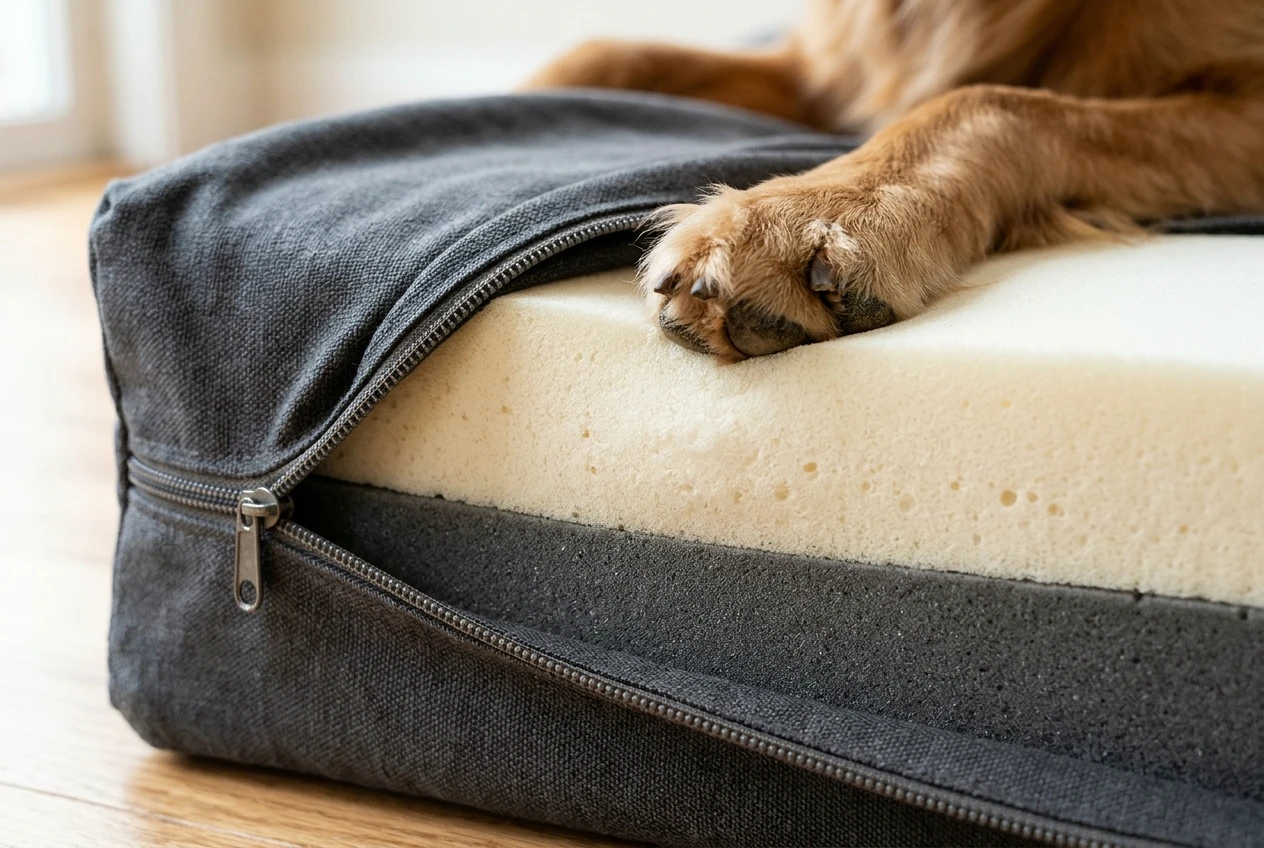
Cover fabric and seams
For dogs that scratch and chew at bedding, look for a described heavy-duty fabric and stitching, not just “durable.” The manufacturer’s description of the fabric weight or material is a helpful clue. If the cover is not mentioned at all, assume it is ordinary upholstery fabric.
A removable, washable cover
A heavy dog sheds, drools and drags in dirt. A zip-off cover that can be machine washed (check the care label for water temperature and drying instructions) saves the foam from stains and odor. Also check whether the cover is replaceable separately. Covers wear out before foam does, and buying a replacement is cheaper than a whole new bed.
A waterproof liner
If your dog has had accidents, or you have a giant breed that drools, a liner between the cover and the foam keeps liquid out of the foam, where it is hard to dry and tends to smell. Check the spec page for the words “waterproof liner” rather than “water resistant,” and read what it says about whether the liner covers the whole foam or just the top.
Our five picks for large breeds, at a glance
We have grouped the picks by design. Whichever design suits you, shop the specific models against the checklist above.
Design | Best suited to | What to confirm on the spec page | Watch out for |
|---|---|---|---|
1. Solid memory foam slab | Heavy dogs that sleep stretched out | Foam thickness, density, cover care | Heat retention, weight, a thin slab |
2. Layered bed: memory foam over firm support base | Giant breeds and dogs with sore joints | Thickness of each layer | Top layer thickness, base that is too soft |
3. Orthopedic bolster bed | Dogs that curl, lean or rest their head | Flat sleeping surface size, bolster fill | Bolsters that flatten, cramped sleeping area |
4. Elevated cot-style bed | Hot sleepers, outdoor use, chewers | Weight rating, frame material, fabric | No cushioning for sore joints on its own |
5. Heavy-duty cover orthopedic bed | Diggers, scratchers and chewers | Fabric description, stitching, liner | Tough covers can still be chewed through |
Pick by pick: who each bed suits and where it falls short
1. The solid memory foam slab
A single thick block of memory foam in a removable cover is the simplest orthopedic design. It spreads body weight across a large surface and, if the foam is dense enough, holds its shape for a long time. It suits a heavy dog that sleeps stretched out on their side, because there are no bolsters in the way.
Where it falls short: a slab is only as good as its thickness and density. A thin slab bottoms out under a big dog no matter how good the foam is. Memory foam can also feel warm for dogs that run hot, so check whether the maker mentions a cooling feature, and treat that claim as the maker’s claim until you see how your dog sleeps on it. Slabs are heavy to move and wash, so the cover needs to come off easily.
Check: foam thickness, foam density if listed, cover care instructions, and whether the cover is sold separately.
2. The layered bed with a firm support base
This design puts a memory foam comfort layer on a firmer foam base. The comfort layer cradles hips and elbows and the base stops the dog from pushing through to the floor. For a giant breed, or a large dog with sore joints, this is usually the best fit on the list, because the two layers do different jobs.
Where it falls short: if the top layer is thin, the dog can still press through it, and if the base is not firm, the whole bed compresses. Read the layer descriptions carefully. Beds that name only “orthopedic foam” without separating the layers are telling you less than you need to know.
Check: the thickness of each layer, whether the layers are bonded or loose, and what the cover is made from.
3. The orthopedic bolster bed
Bolsters are raised sides that give a dog something to lean on or rest their head against. Many big dogs like this, especially ones that curl up, and a leaning dog gets support under the neck and shoulders. A good bolster bed has orthopedic foam in the base and a firm bolster that holds its shape.
Where it falls short: a bolster takes up room, so the flat sleeping area is smaller than the bed’s outside dimensions suggest. A Great Dane that stretches out can end up with legs hanging over the edge. The bolsters can also flatten first, because they are often filled with a softer material than the base. Check how the maker describes the bolster fill, and measure the flat interior, not the outside.
Check: interior sleeping dimensions, base foam thickness, bolster fill and whether the bolsters are removable or cleanable.
4. The elevated cot-style bed
An elevated bed holds a tensioned fabric surface above the floor on a frame. There is no foam to flatten, which is a strong point for heavy dogs, and air moves underneath, which suits dogs that run hot. These beds can also suit chewers, because there is no stuffing to pull out, though that depends on the fabric. We cover the type in more detail in our piece on elevated pet beds and their benefits.
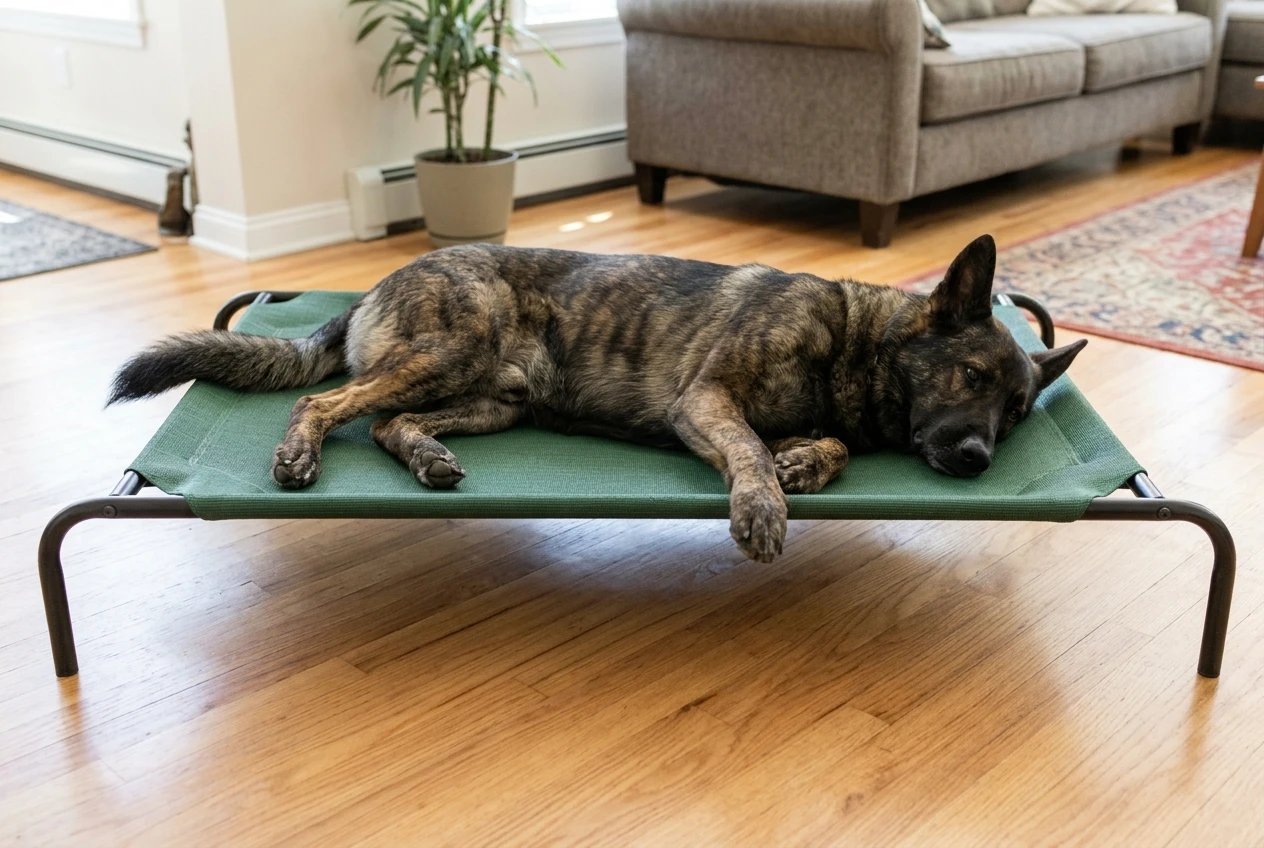
Where it falls short: the surface is firm, and a dog with sore joints may not find it comfortable on its own. Some dogs will not use a cot at all. The manufacturer should list a weight rating, and you should check it against your dog’s real weight with room to spare. A cot is a good second bed for a garage, porch or crate area, and a good first bed only for a dog that already likes firm surfaces.
Check: the stated weight capacity, the frame material, the fabric, and the bed’s dimensions with the frame.
5. The heavy-duty cover orthopedic bed
Some orthopedic beds are sold on the toughness of the cover rather than the foam. They use heavier fabrics and reinforced stitching for dogs that dig and scratch before lying down, and some include a liner for moisture. For a young, strong dog that destroys ordinary bedding, the cover is the part that fails first, so this is where to put your money.
Where it falls short: a tough cover does not guarantee good foam. Check the foam specs as carefully as you would for any other bed. And no cover is chew-proof. If your dog is a determined chewer, a bed of any kind can become a toy, and the foam is not safe for dogs to swallow. If your dog tears into bedding, consider supervised use until you see how they treat it.
Check: the fabric description, whether stitching is reinforced, whether a liner is included, and what the foam inside is.
How to tell if a bed has gone flat before you waste another one
Beds rarely fail all at once. The signs show up gradually, and a quick test spares you from keeping a bed that no longer helps.
- The press test. Press your hand firmly into the middle where your dog lies. If you can feel the floor or a hard layer through it, the foam has compressed.
- Look at it from the side. Crouch down and look across the surface. A visible dip in the middle or a bed that has gone lopsided shows permanent compression.
- Check the recovery. Press down and release. Good foam returns to shape. Foam that stays dented, or comes back slowly and only partly, is worn out.
- Watch your dog. If your dog has started sleeping beside the bed, on the bare floor, or with limbs hanging off the edge, they may be telling you the bed is not comfortable. Stiffness after getting up is worth mentioning to your vet.
- Feel for lumps. In beds with loose fill, lumps and empty patches mean the filling has shifted.
If the cover is the problem and the foam still feels solid, a replacement cover is cheaper than a new bed, provided the maker sells them. If you are weighing whether a pricier bed is worth it, our comparison of luxury versus basic pet beds goes through the differences.
Sizing a bed for a dog who sprawls, curls or leans
Large breeds sleep in very different shapes, and the size that suits one will not suit another. The three common sleeping styles lead to different choices:
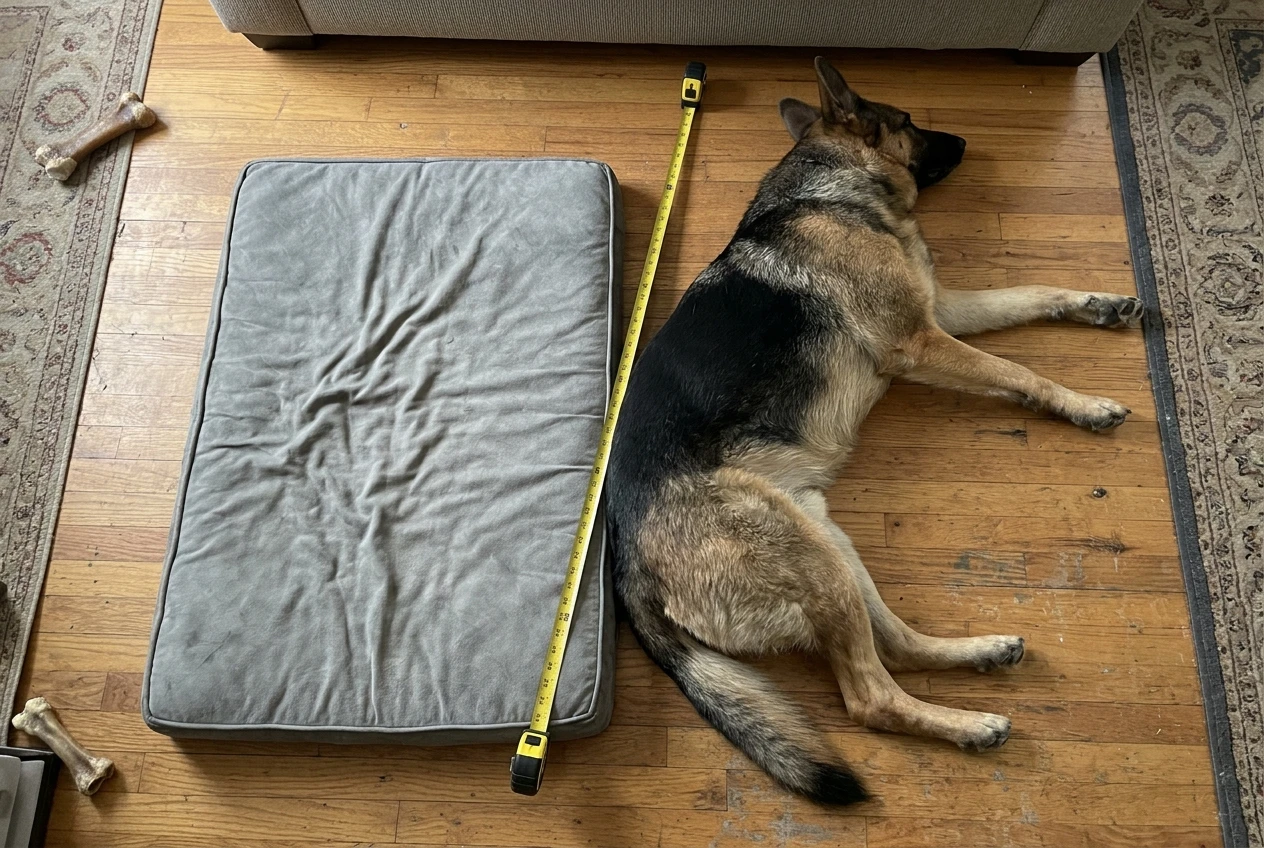
- Sprawlers lie flat on their side with legs out. They need the longest flat surface, so a slab or layered bed with no bolsters, sized longer than the dog’s full body length, usually works best.
- Curlers tuck their body into a circle. They need a wide enough surface to hold the curl, and often like a bolster to lean against. Measure the width of the curled dog, not the length.
- Leaners rest their head or back against something. A bolster bed suits them, but check the interior size so that the dog still has room to lie flat when they want to.
Measure your dog while they are stretched out on the floor, from nose to the base of the tail, and then add room for comfort. Check the manufacturer’s size chart, because “large” and “extra large” mean different things from one brand to another. Many dogs between sizes do better with the bigger one, because a dog hanging off the edge is not getting joint support where it counts.
Making a big bed last: covers, washing and rotation
A good bed lasts longer when you look after it, and the habits are simple.
- Wash the cover regularly. Follow the care label for temperature and drying. Dirt and oils wear fabric down, and odor builds up in foam when covers are not washed. Our guide on how to clean and maintain pet beds covers the routine in detail.
- Keep moisture out of the foam. If the foam gets wet, let it dry thoroughly before putting the cover back, because damp foam develops odor and breaks down faster. A waterproof liner helps here.
- Rotate and flip. If the bed has a uniform design, turn it around every so often so the dog’s heaviest points do not always land on the same spot. Only flip a bed if the maker says it is designed for it, as many orthopedic beds have a specific top and bottom.
- Fluff and reposition bolsters. If the bolsters have loose fill, reshape them regularly so the filling does not clump.
- Trim nails and watch the chewing. Long nails wear down covers faster. If your dog starts chewing on the bed, remove it and call your vet if swallowed foam or fabric is a possibility.
- Keep a spare cover. A second cover means the bed is never out of service on wash day.
Before you order
Big dogs ask a lot of a bed, and the best way to choose one is to compare specs on the manufacturer’s page rather than trust the marketing line. Thickness, density, layers, cover fabric and a washable, replaceable cover tell you far more than a photo.
Before you order, measure your dog stretched out on the floor and check our guide to choosing the right bed size. If your dog is older and stiff, our piece on the best orthopedic pet beds for senior animals adds more on what helps aging joints.