
Shopping for a winter pet bed brings up one question quickly: do you buy a self-warming bed or one that plugs in? The self-warming vs heated pet beds choice comes down to your pet’s age, coat, chewing habits and the spot where the bed will sit. Neither type is better in general. Each fits certain pets and certain rooms.
This guide covers how the two work, where each one earns its place, and which questions to answer before a cord goes anywhere near your pet.
How each bed makes warmth
A self-warming bed has no power source. It uses insulating layers, often a thick fiber fill, sometimes with a reflective lining, to keep the heat your pet already gives off from escaping into the floor and the air. The bed warms up only while your pet is lying on it, and it takes a little while to build. If nobody is in it, it is just a bed at room temperature.
A heated bed has a heating element inside, powered through a cord, and it produces warmth whether or not your pet is on it. Some are designed to reach only a gentle temperature above the surroundings, and many have a cover you can remove. The details differ a lot between products, so read the manufacturer’s instructions for the one you are considering.
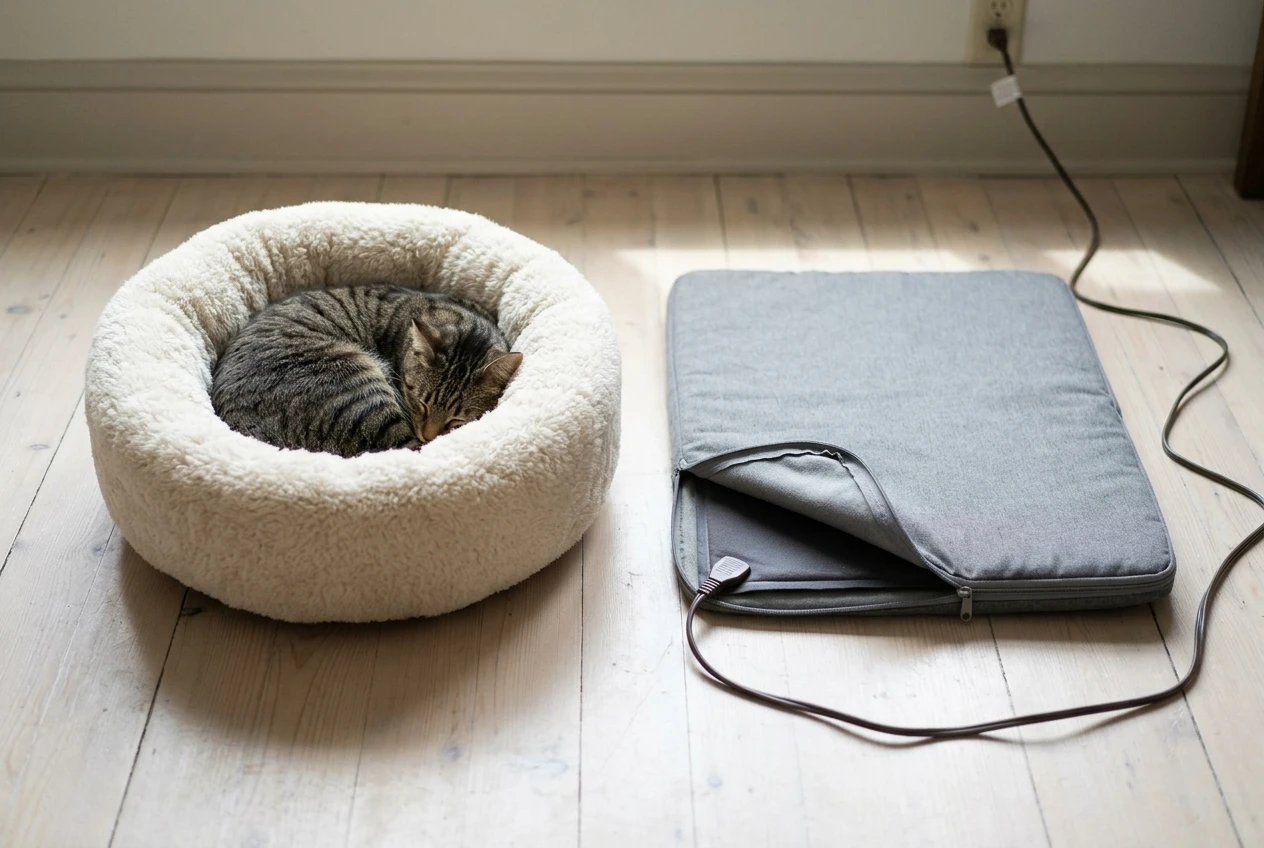
That one difference drives everything else in this guide. A self-warming bed depends on your pet’s body heat and is simple. A heated bed supplies heat on its own, and that means electricity, a cord and more things to check.
Where a self-warming bed is enough, and where it falls short
For a healthy adult pet with a decent coat in a heated home, a self-warming bed is often all that’s needed. The pet curls up, the bed holds in their warmth, and there is nothing to plug in, nothing to chew through and nothing to forget about when you leave the house. It also works in any room, since you are not limited by outlet position.
Self-warming beds suit these situations well:
- Pets who chew or dig at their bedding
- Households where cords would be hard to hide
- Pets who like a snug, enclosed nest, such as many cats
- Travel, a car, or a crate that has no power nearby
The weak point is the dependence on body heat. A pet who produces little heat, or who lies on the bed only briefly, may never warm it. A very small, thin or frail animal can lie on a self-warming bed and still feel cold, because there is not enough warmth to trap. A cold tile or concrete floor can also pull heat out of the bed faster than a light pet can replace it. A thicker bed helps, but there is a limit to what insulation alone can do.
Where a heated bed earns its place: seniors, short coats and cold floors
Heated beds make the most sense when the pet cannot make enough warmth alone. Older animals often feel the cold more and spend more of the day lying down. Short-coated dogs and thin-coated cats have less natural insulation. Any pet sleeping on a cold floor, such as a garage-adjacent utility room or an uncarpeted hallway, loses heat downward all night.
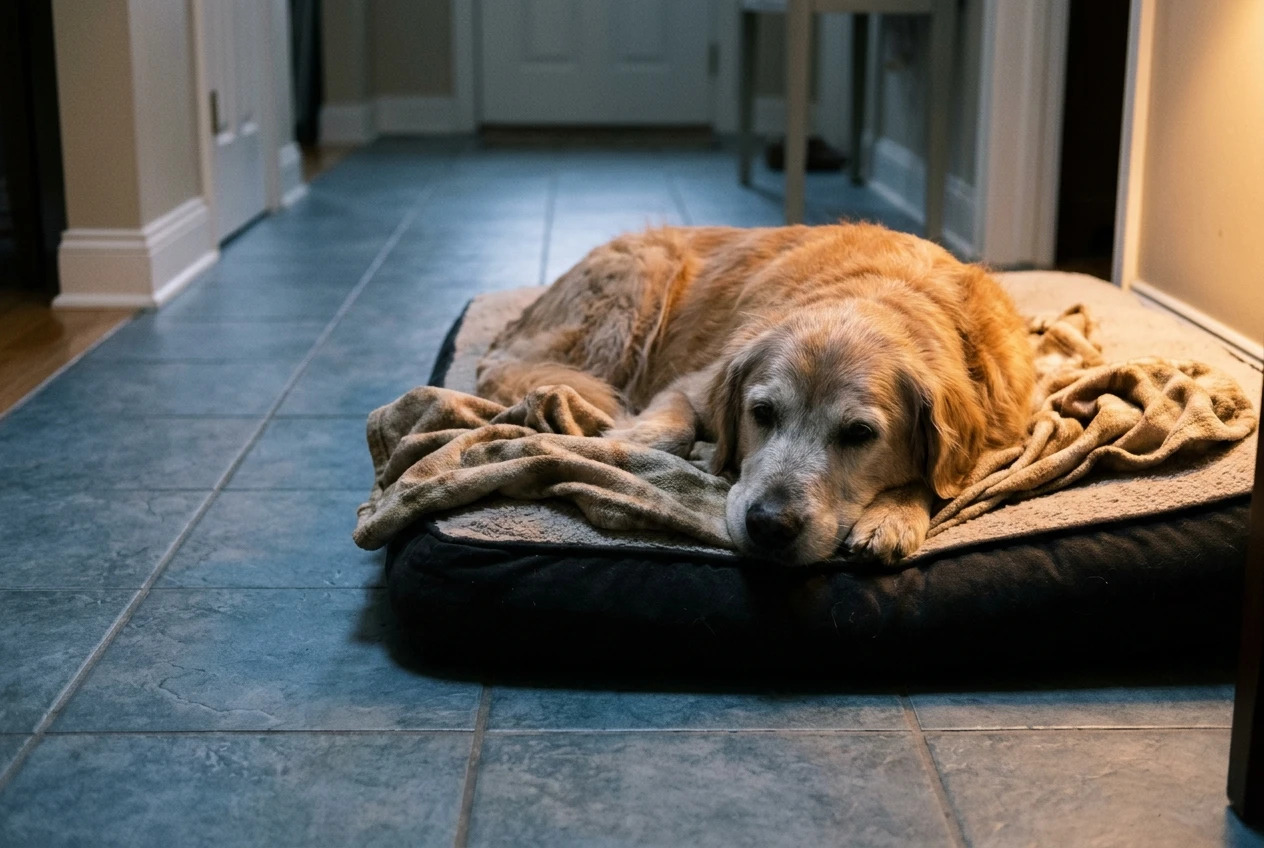
Seniors deserve a second thought. Many older pets also have stiff joints, and warmth can be comforting for them. Pair the warmth with proper support: our guide to the best orthopedic pet beds for senior animals covers cushioning, which matters as much as temperature for sore joints. Ask your vet whether a heated surface is appropriate for your particular pet, especially if they have a medical condition.
If you want a broader look at why people choose heated beds in the first place, the benefits of heated beds for pets in winter post goes through them. This guide is for deciding whether one is right for your pet at all.
The safety questions to ask before plugging anything in
A heated bed is an electrical product, so check it like one. Before you buy, and again before you plug it in, work through these questions.
- Is it independently safety certified? Look for a recognized safety listing on the product or its packaging, and check that it covers the bed itself, not just the power adapter. If you cannot find any mention of testing, treat that as a reason to look elsewhere.
- Is the product made for pets? Heating pads designed for people are not built for animals that lie on them for hours, and they can get too hot.
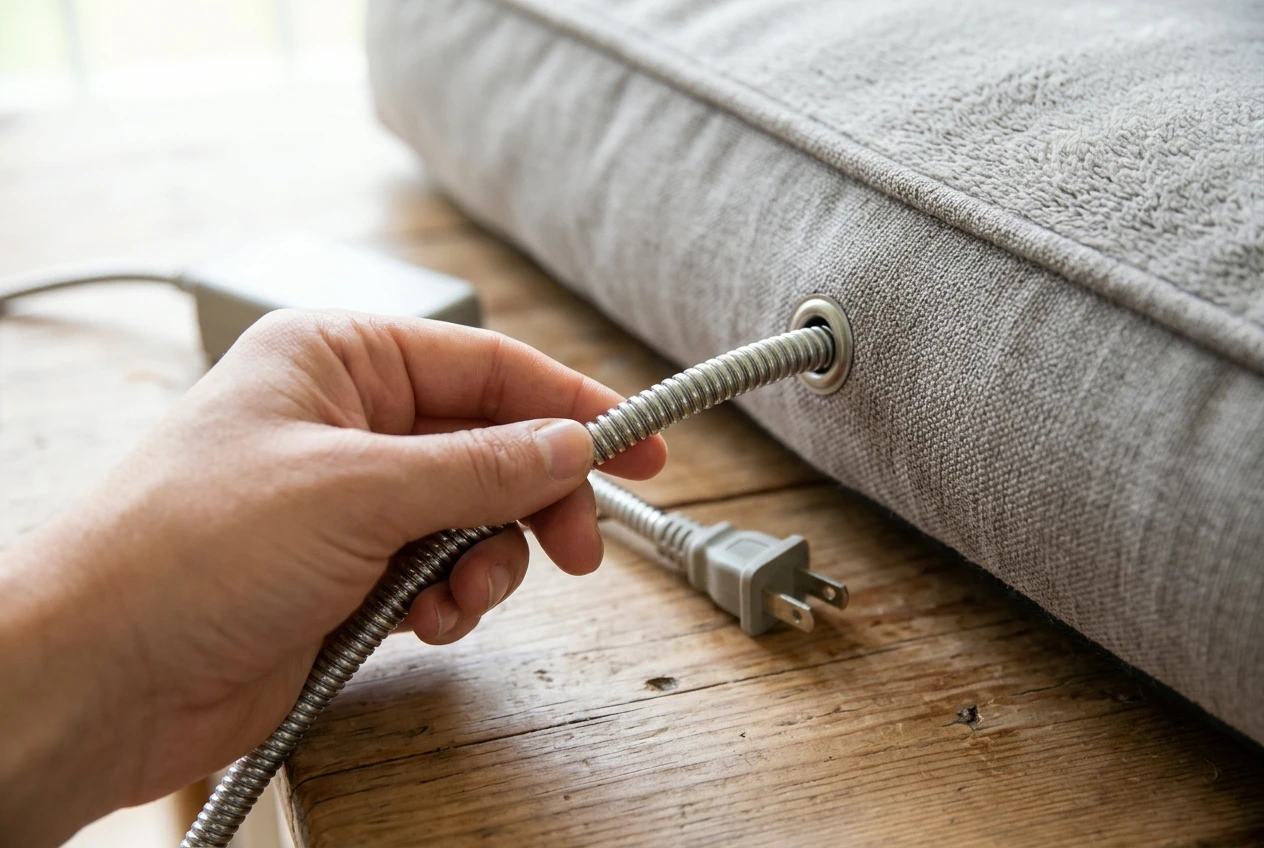
- How is the cord built? A cord covered in a protective wrap or metal sheath is harder to chew through. Check where it leaves the bed, since that is the spot that gets pulled and bent.
- Does the bed regulate its own temperature? Many models are designed to stay within a safe range or shut off if they overheat. Read the manual to see what yours actually does.
- Is the cover removable and washable? Accumulated hair, dirt and moisture are things you do not want sitting on a heating element.
- What does the manufacturer say about unattended use? Follow it. If the instructions say to supervise, supervise.
Once you own the bed, inspect it regularly. Look at the cord and plug for fraying, cracks, exposed wire or discoloration, and check the bed surface for lumps or damage. If anything looks wrong, unplug it and stop using it.
Pets who should skip the heated bed, or need supervision with one
Some pets are better off with a self-warming bed, or with a heated bed only when you are watching.
Chewers. A puppy, a young dog, or any pet who mouths cords and fabric should not have access to an electrical cord. Even a protected cord is a risk if your pet is determined. A self-warming bed in a chew-resistant cover is the safer choice.
Kittens and very young animals. Young pets cannot regulate their body temperature as well as adults, and they are curious about cords. Talk to your vet before using any heated product with a kitten or puppy, and keep it out of reach when you cannot watch.
Pets who cannot move away easily. A heated surface only works safely if the pet can step off it when they feel too warm. Animals who are very frail, sedated, recovering from surgery, or who have conditions that dull their sense of temperature may not move away in time. Your vet can tell you whether heat is suitable for them at all.
Pets prone to accidents. If your pet is incontinent, moisture and electricity are a bad combination. Choose a waterproof, vet-approved option or use a self-warming bed with a washable cover instead.
For a pet who is fine with a heated bed but still curious, supervised use for the first few sessions lets you see how they behave on it.
Side-by-side comparison
Self-warming bed | Heated bed | |
|---|---|---|
Source of warmth | Your pet’s own body heat, held in by insulation | A heating element powered through a cord |
Warm without the pet on it | No | Yes |
Cord and electrical risk | None | Yes, inspect the cord and plug regularly |
Chew risk | Fabric only | Cord adds a hazard |
Power needed | None | Outlet within cord reach |
Placement | Anywhere | Near an outlet |
Upkeep | Wash the cover and refluff | Wash the removable cover, check the cord and plug |
Cleaning | Often machine washable, check the label | Remove the cover and follow the instructions, never soak the element unless the manual allows it |
Good for | Healthy adults, chewers, snug sleepers | Seniors, short coats, cold floors |
For washing routines that suit either type, see how to clean and maintain pet beds. Always check the care label of your specific bed first, because heated beds in particular have rules about what can be washed and how.
Which bed suits which pet
Cats. Many cats like a small, enclosed, self-warming nest where they can curl tight, and they will choose it over a larger flat bed. A healthy adult cat in a warm home usually does well with that. A senior or thin-coated cat who sleeps on a cold floor may benefit from a heated option, with your vet’s agreement and a good look at the cord.
Small dogs. Small dogs lose heat quickly because they have less body mass to hold it. A self-warming bed with raised sides works for many of them. For a small dog with a thin coat, a senior small dog, or one who sleeps on a cold floor, a heated bed designed for pets may be worth the extra care.
Large dogs. Large dogs produce plenty of heat and usually keep a self-warming bed warm. Their bigger concern is often joint support and floor contact, so a thick orthopedic base matters. Our post on orthopedic beds for large dogs looks at which hold up under a heavy dog. A large senior dog on a cold floor is the case where adding a heated bed, as your vet advises, makes sense.
Whichever you choose, size matters. A bed that is too small leaves part of your pet on the cold floor, and the warming effect is lost. Choosing the right bed size for your pet explains how to measure.
Setting up the bed so your pet actually uses it
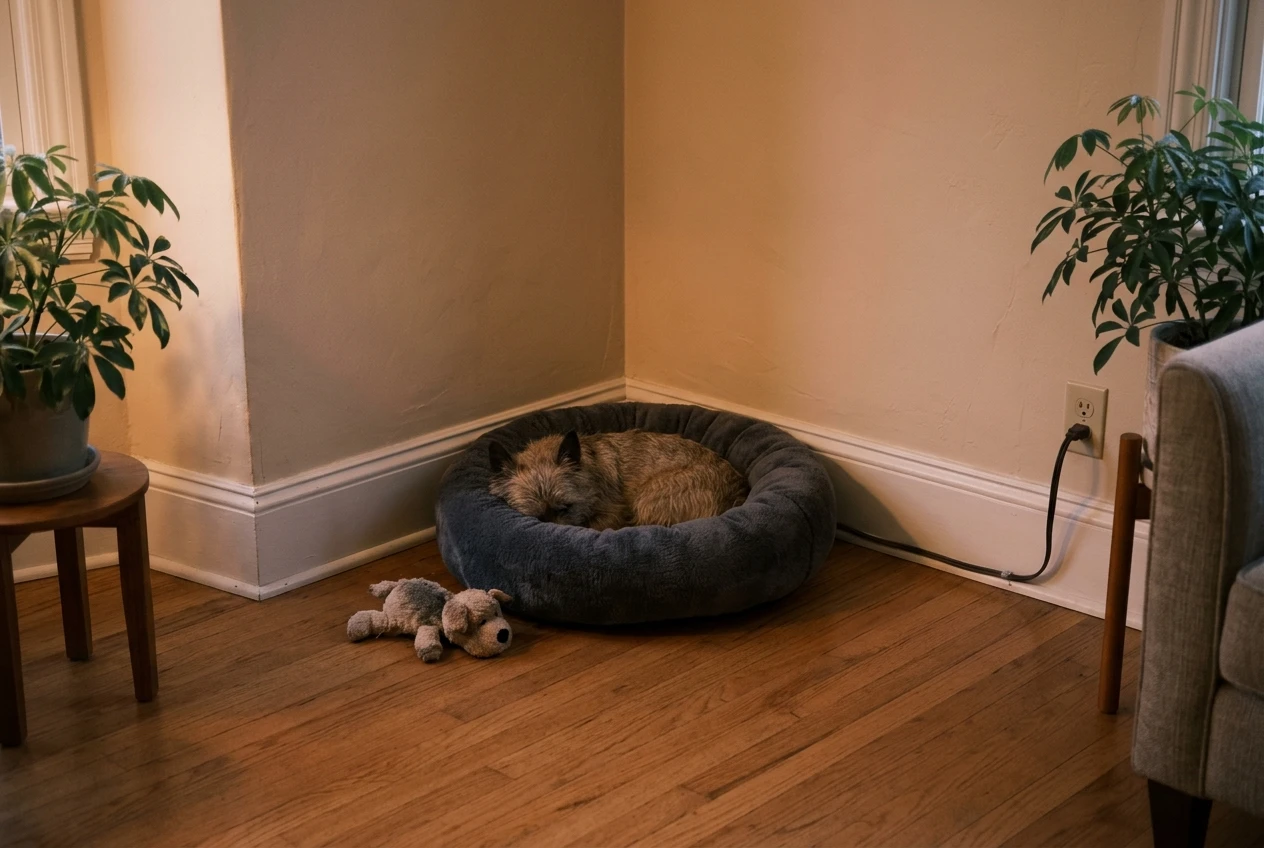
A bed in the wrong spot goes unused, however good it is. Pets tend to pick places that are out of drafts, away from heavy foot traffic, and close to the family. Put the bed against a wall or in a corner, off the bare floor if you can, and away from exterior doors. Pet bed placement tips go deeper on choosing the spot.
For a heated bed, keep these points in mind:
- Place it near an outlet so the cord never stretches across a walkway or hangs loose.
- Route the cord along the wall or behind furniture so it is out of reach, and avoid running it under rugs.
- Plug it directly into a wall outlet unless the manual says otherwise, and do not tuck bedding or blankets over the heating area unless the instructions allow it.
- Leave one part of the room unheated so your pet can move to a cooler spot.
Let your pet approach the bed in their own time. A familiar blanket or a favorite toy placed in it can help, and a treat for stepping onto it works well. If your pet ignores the new bed, how to encourage your pet to use their new bed has methods to try.
Watch your pet in the first few days. If they pant, move off the bed repeatedly, or seem restless on it, it may be too warm or they may simply dislike it. A self-warming bed or a different location can be the better answer.